
These three major crises pose a threat to the rupee, a historic decline has been witnessed against the dollar
No one imagined that India, the world's fastest-growing economy, would face such a dire situation. The rupee has depreciated by nearly 6% against the dollar this year. Three major crises are responsible for this plight of the rupee. Let us explain them in detail.
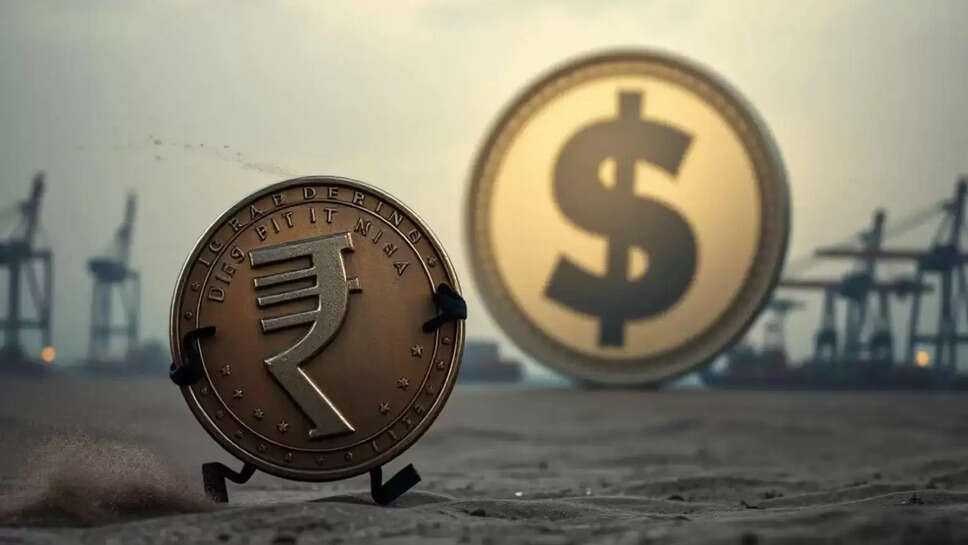

The rupee has been steadily declining. On Friday, the rupee closed at another record low of 90.41 against the US dollar. In early trade, the domestic currency had reached a historic low of 90.55 against the US dollar, primarily due to the delay in a trade deal with the United States.
Data shows that the Indian rupee opened at a historic low of 90.31 against the US dollar. During the trading session, the rupee weakened further, reaching a new low of 90.55.
The rupee saw a slight recovery in the afternoon session, reaching 90.37. By market close, the rupee had closed at a new historic low of 90.41.
Significantly, the rupee has already declined 0.50 percent against the dollar this week. This represents the largest decline in the rupee's value against the dollar in three years, making it the worst-performing currency in Asia against the dollar this year.
These are the three enemies of the rupee.
Delay in trade deal with America
Although Indian Prime Minister Narendra Modi and US President Donald Trump recently discussed bilateral cooperation, there was no concrete indication of any tariff relief.
Experts say the rupee has been under pressure since the US imposed tariffs, and its impact will be felt by the end of the year. Markets are awaiting the final date of the trade agreement with the US.
Analysts say the rupee's strength will now depend on when the Indian government announces the final trade agreement with the US.
Foreign investors book profits
The pressure on the domestic currency is increasing due to the continuous selling of domestic shares by foreign investors. According to a Reuters report, foreign investors have withdrawn shares worth $18 billion from the Indian stock market this year.
If we talk about the current month, they have sold shares worth about Rs 18 thousand crore. December is the 8th month of the current year in which foreign investors are selling.
Only four such months have seen investors investing in the stock market. Whereas in 10 out of the last 15 months, foreign investors have withdrawn their money from the stock market. During this period, the rupee has fallen by about 8 percent against the dollar.
Dollars are being bought heavily
Local companies are buying dollars heavily to meet their year-end payments, further weakening the currency. Traders say the RBI has intervened, but the central bank has not set a specific target level for the currency.
However, on December 16th, the RBI is buying dollars from banks through currency swaps and injecting several thousand crores of rupees into the banking system. This could provide minor support to the rupee, but this support may be limited.
What could be the future of the rupee?
Commenting on the rupee, Anindya Banerjee, Head of Currency and Commodities at Kotak Securities, said that the USDINR remains under pressure due to continued foreign investment fund (FPI) outflows from both bonds and equities.
With global yields rising, the unwinding of USD and JPY carry trades is putting pressure on Indian bonds.
However, there are some positives regarding the India-US trade deal, which could provide some relief to the rupee. The analyst further added that overall, we expect a broad trading range of 89.50-91.00 on the spot.